Preamble
A preamble — just four weeks late.
I'm using the devlog for two potentially different things, neither of which may be appropriate.
One is just a pure record of what I've done, but that's somewhat irrelevant as I have a set of raw logs that I keep internal which I use to build the weekly devlog.
The other is to convince me, and possibly you, that I'm making progress; showing I'm chipping away at the wall like The Doctor hitting a wall of diamond, knowing that it's just a matter of time to beat his way through to the other side. A lot of time.
When I was teaching people how to use Unity there was one example I would keep in my back pocket and pull out as the scope and scale example — often as part of my lecture on prepping the GDD and "Getting it all on paper". As much as I have been a game developer, I have spent much more time as a producer shipping really big projects, so I know that I'm carefully fighting against the forces I myself have described in detail to every new, budding game developer.
This is the example:
The first time I was digging around in the supporting files for World of Warcraft, I found the folder that contained all of the icons. There were over 2,000 of them. If I, or any single game developer, were to make 2,000 icons for their game, and they were able to make one icon an hour, on average, and worked a ten-hour day, with no wee breaks, no meals, no interruptions — and this could include spending more than an hour on painting an icon and then recolouring it in Photoshop to make another six versions — at one icon an hour on average … the developer would need 200 days, or one working year, to make all of the icons. After a year, if this was the first task, that developer — or myself — would have nothing to show other than 2,000 icons.
This point is not lost on me.
I have a "100-day plan" to get this game up and running on a technical level.
That game will be a very, very basic shell at 100 days.
In a planned one hundred days of build work we will have a real, playable, online space combat game. Not a trailer. Not a demo. You strap into a single-seat fighter and fly it on a throttle and stick, the way the old classics flew: no drifting, no wrestling with physics, just you, your ship, and a sky full of trouble. You launch from a station into a live, shared battle zone where something big is already kicking off across several fronts at once — and you will be useful the moment you arrive. No raid leader, no roster call, no waiting for a slot; a voice on the radio will tell you where the fight is and what's going on. You decide where to be. Take a beating and you can run home, dock, and launch straight back into it. And when you log off, the server keeps running — it will all still be there tomorrow. It will be small at this point: one zone, a couple of ships, rough edges in plenty of places, and just a handful of us flying together. But it'll be a genuine, persistent game you can actually fly — the solid foundation everything else gets built on.
The compromises will be assets; art, music, sound effects — all of the assets that need to be built. Ships may be prebuilt purchases or low-poly stand-ins. The "deathcycle" may be just a simple explosion — not the cinematic experience you deserve. The 100 days serves the engineering, not the art.
From there, we build outward — engineering first. We deepen the home base: the full loop of docking, repairing, rearming, and re-fitting our ships between fights. We add salvage to scavenge from the wreckage we leave behind, and the ability to fly cleanly from one zone straight into the next without so much as a loading screen.
Then the world starts to open up. A second region to fly to, and perhaps a third, each with its own character and its own battles. A working economy, where prices shift from place to place and there's a reason to haul, trade and choose your gear. And the first threads of a story to fly through — a reason you're out here, and people out here who'll remember what you did.
The estimated timing for this is an additional 50 to 100 days of engineering.
Finally, we throw the doors open. The game goes into a development early access period on the Epic store. The servers keep standing, with set times to gather and fly together. And it grows from a handful of us into a proper community — a living little world that carries on whether you're logged in or not.
Plans for growth
This is a real low-level bootstrapping job. I'm going to be supplying the first layer; that 100 to 200 days of engineering and some art. With player support and player participation we hope to be able to fund the custom art assets. I can build them, but even if I keep the build of a ship to under 10 days, there just isn't enough time to create any reasonable volume; the icon problem. Some ships will require more than that, as bombers will need animated bomb bay doors… tho' to be honest, these are more like missiles.
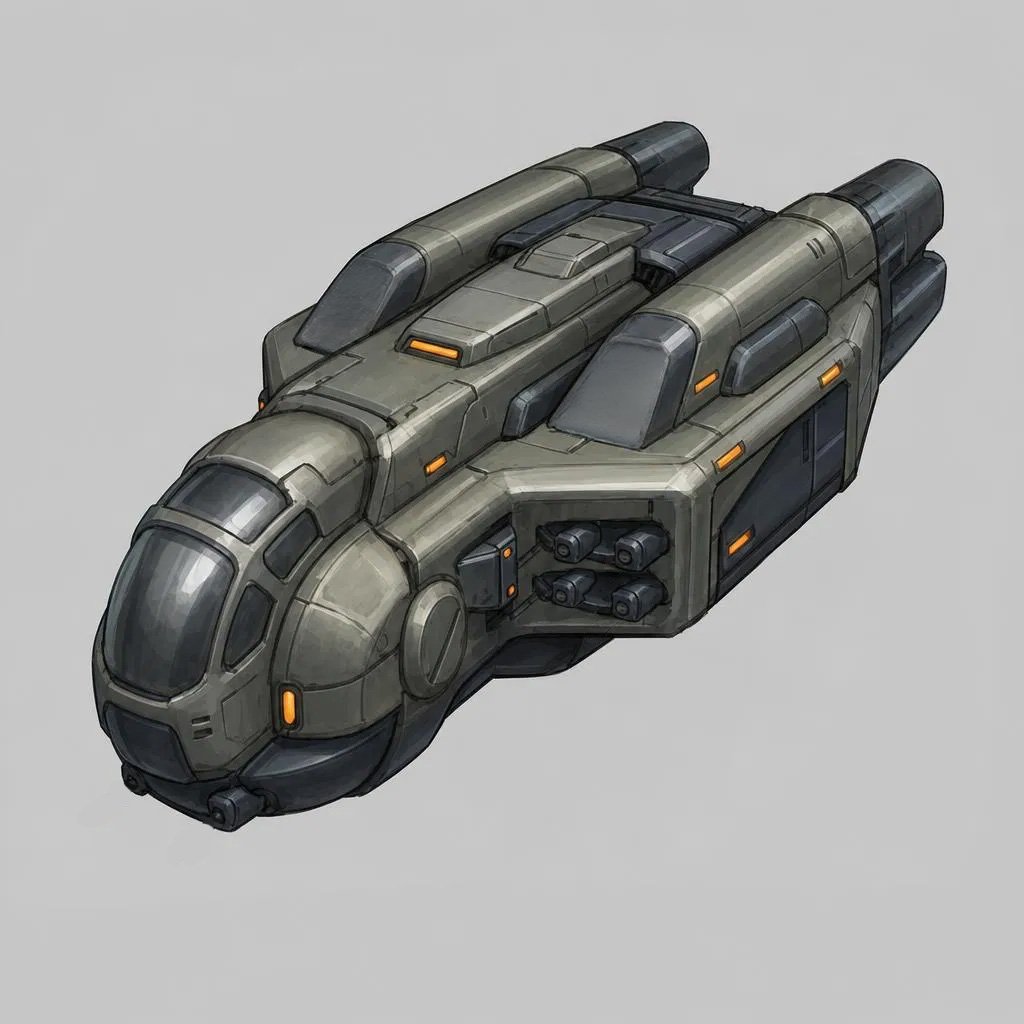
Starting Bomber.
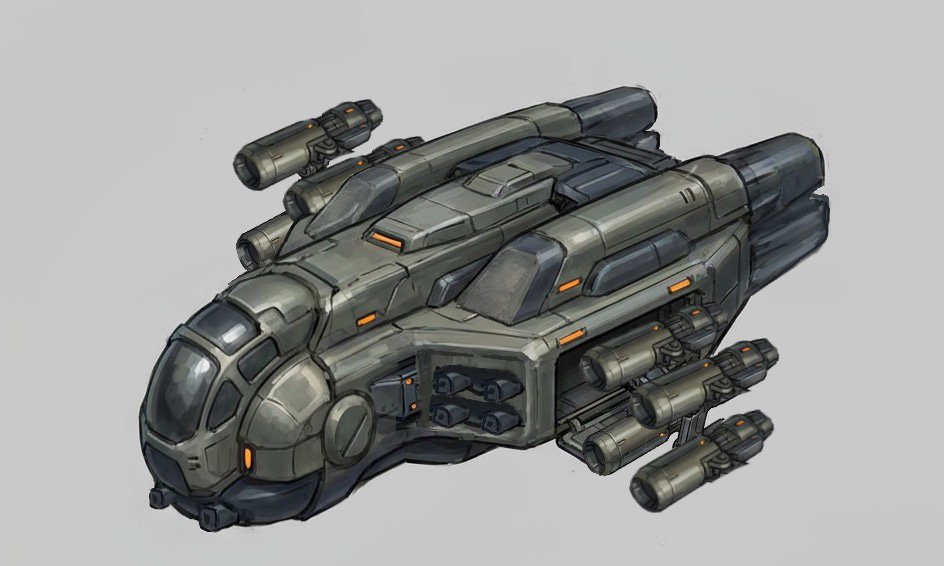
Starting Bomber Deployed.
There are government matching funds that I intend to tap into. This is the primary path to art assets, and to a permanent staff. There are government-backed business loans, but that is a danger when income is a potential mirage glimmering on the horizon. Those will have to wait until we have visible and viable traction. A grant is a grant. A loan needs servicing from the day you draw it down.
As a benchmark of our current progress, this is the Table of Contents for the current GDD. This is partly, as I said above, to convince myself and you — the player — that we are making progress. But it's partly to crow a bit about how much we have achieved. This is a bit deceptive because each section, tho' legitimate, needs a lot more work.
Cygnus Rift GDD — Table of Contents
- 00 — Index & Manifest
- 01 — Overview & Pillars
- 02 — Setting & Story
- 03 — Flight System, Control Grammar & Tuning Plan
- 04 — Fitting, Energy & the Chassis Mechanism
- 05 — Combat, Weapons & Enemy Design
- 06 — Death, Loss & Recovery
- 07 — Zones, World Structure & Travel
- 08 — Identity, Ownership & Ships
- 09 — Economy, Markets & Progression
- 10 — Squadrons, Institutions, Modes & Onboarding
- 11 — Art, Cosmetics & Presentation
- 12 — Audio & Music
- 13 — UI, HUD & Controls
- 14 — Technical Architecture
- 15 — Production & Schedule
- 16 — Monetisation, Sustainability & Community
- 17 — Machines, Tools & Systems
- 18 — VFX
- A01 — Glossary
- A02 — DevLog Style Guide and Technical Construction
- A03 — The Schedule Workbook: What It Is and How To Use It
- A04 — Coding Standards
- A05 — Research Register
Each of those is a chapter, not a heading with a paragraph under it — and each one still needs a lot more work.
More later…
Thanks for reading.